Showing posts with label books. Show all posts

Monday, September 24, 2012

My Diary Saturday 22nd September 2012 by Kate Wills. Of cats, stars, and slugs...

Looked to the skies on my way to and from feeding the cats near the homeless shelter, which I often do on these excursions, as news reports mention people across the nation having spotted a meteor shower. The skies are crystal clear with an unusually generous sprinkling of stars. Some I recognise, such as Orion and his belt. Returned and doled out another helping for our own Desmond and Jeremy and went to bed, where night-time reading is Bill Bryson's Notes from a Big Country, to the accompaniment of a variety of respiratory noises from Martin.

Saturday resumes at about 9:30 for me, with Martin getting ready to pay a social call on a friend who is not well. He asks me to do something while he is out. "Have you got that?"

"Yeeess" I mumble in a semi-vegetative state, and drift off again to Brahms German Requiem on Building a Library on Radio 3. I haven't slept well again this week, so happy to be snoozing. Emerge into consciousness to discussion of Debussy's wonderful Preludes. Don green trousers, and red and white striped T-shirt. Good late summer weather shines through the windows.

Breakfast is a mug of coffee, slice of wholemeal bread and dark marmalade and two ageing bananas, consumed to Debussy and Beethoven on Radio 3. Tiddle around doing a few oddments, then do something similar upstairs in the bathroom. While seated, recall Martin asked me to do something while he's out. What the hell was it? Come to think of it there's a card by the front door...A sudden burst of inspiration!! Funny, this often accompanies a trip to the loo.

What's the time? 12:19 Ah, thank goodness. Finish what you're doing Kate, and hotfoot to the Post Office.

Slippers off, trainers on and a few minutes later I return home with a bubble-wrap envelope whose lumpiness indicates another element for the Northampton tram model that Martin is building.

Satisfied to have escaped a lecture from my nearest and dearest, I put the kettle on when he arrives home half an hour later.

"Thanks for getting the post. Who won Brahms German Requiem this morning?" I say I was too tired to notice. I make tea in a glass pot with loose leaf Assam, and consume it while engaging with the wider world via pc, and listening to Radio 4 news, Any Questions and Any Answers, which elicits much huffing over the airwaves on the pros and cons of capital punishment. One caller makes the not unreasonable point that it is hypocritical of successive governments to quash calls for a national debate on the reintroduction of capital punishment when they are quite happy to send our soldiers off to war knowing that many innocent lives will be lost in the resulting mayhem.

Biscuits going down at an alarming rate. The Malted Milk bought yesterday are two thirds gone.

Not much amongst the e-mails (despite there being around 18 new arrivals). Log on to the Great War Forum, clear the new registrations validation queue and post this in the social section called ‘Skindles’:

Reading Bill Bryson's Notes from a Big Country (published in the USA as I'm a Stranger Here Myself) he recounts how he insisted on buying a house with a screened porch, where he whiled away the summer evenings. However, he failed to notice a gap in the mesh until the cat joined him on the porch one night - then he noticed a skunk had joined them too. He related how neighbours (neighbors) were obliged to burn all the soft furnishings in their house in an attempt to eradicate the smell when their visiting skunk took fright.

When I visited New England many moons ago I expressed a wish to see native animals such as beavers, raccoons and the like, and one night my hostess took me off on a walk in search of skunks, which she said was quite a perverse thing to do really. We didn't encounter one (or beavers, raccoons, moose etc during my stay), but Bryson's tale made me Google skunks, which led (to my surprise) to this

http://www.petskunks.co.uk/Home.html

Where I learn:

"Domesticated skunks can legally be kept as pets in the UK. However, the Animal Welfare Act 2006[13] has made it illegal to remove their scent glands (it is considered to be a cosmetic operation), thus making them impractical as pets. Many owners abandon skunks in the wild when they discover that vets will no longer perform the operation to remove their scent glands. Without its scent glands, a skunk will have difficulty defending itself from predators"

Now, I have to say I have no intention of joining the ranks of pet skunk keepers (the reaction of my cats and husband (note order) being prime considerations); however, I do envisage some benefits of becoming a social outcast in my own home, imaging no more bills as the postman won't come near; no more representatives of wandering religious groups, guaranteed seats on buses and trains etc etc

Your thoughts and experiences please.

::::::::::::::::::::

Also log on to Northampton Past, my only reason for frequent visits to Facebook, where my recent post has attracted nine 'likes' from kindred spirits:

“It took a lot of cajoling from different people to get me on Facebook. Initially it was disappointing. Do I really need to know that Jim has just opened a bottle of ketchup, or that Jane has just emerged from Primark with a pair of tights? Yes there are good things about Facebook, like keeping in touch; best of all is Northampton Past - a shining beacon on a lapping sea.”

Martin departs again to watch Saints v Worcester. I decide this is too good a day to waste indoors, so at 3pm depart for a stroll across The Racecourse to have a rummage in the Kettering Road charity shops. It is my theory that at any one time, one particular title will be found on the bookshelves of every charity shop in town. It used to be Hilary Mantel's Fludd (which I have never read). Now it seems to be Lynn Truss's Eats, Shoots and Leaves, which catches my eye in the Shelter shop. This should mean that lots of people are reading it to the betterment of written English. Actually the proliferation of copies and continuing abysmal standards of written and spoken English seems to indicate that it was either bought by people who cherish our language and agree; or by people who haven't a clue what the fuss is about. Also on the shelves is another once in vogue bestseller Captain Corelli's Mandolin.

There's a nice pair of new shoes my size on the footwear shelf, but not nice enough, and my finances emerged unscathed, which is often the way in the Shelter shop. I seldom find anything in there, and sustained research shows that some shops seldom yield finds, whereas others nearly always house something that says 'c'mon, buy me - it's for charity' and out comes my purse.

Next stop, the yellow-fronted charity shop just below the Music School on the corner of Clare Street. There, on the 50 pence rail, I find a new pair of Next trousers, a shirt in shepherd's delight dusky rose, a pair of navy shorts and a purse. I ask to try these on (except the purse) and go to their combined loo and changing room. Great! A Cinderella moment. Everything fits; but due to the main purpose of the room have a Pavlov's Dogs moment too. The sight of a loo triggers a need to use one. Something to do with my age, or bladder.  Probably both.

£2 splurge complete, I cross the road to the Samaritans shop, where a customer in the changing room needs a tie for a school-themed party. I help the assistant by finding two items on the tie-rack that fit the bill, one of which, a short maroon with gold stripes affair, could well be a school tie anyway.

Look at the CDs, nothing doing; and the books. Decide against spending 50p on a little-used copy of how to get your head around MS Vista. The original owner seems to have parted with £18, and here it languishes for 50p. Time and computer programs move on. Do however find another purse, and a more serviceable one that purchased 10 minutes ago, for 75p. Also deplete their stocks of photograph albums for my postcard collection. Total bill £2.80.

Return home well laden, noting skip at the corner of Hood Street containing a carton which seems to indicate installation of a new toilet. Honestly, what is wrong with people nowadays! Throwing rubbish into skips!

The Racecourse was busy, with plenty of kids in the playground, on the swings and playing basketball. A family seems absorbed looking at something on the path. It turns out to be a baby hedgehog, and they tell me there is another one nearby.

"Well, if they are out during the day at any age something is very wrong", I say, and we agreed they may come from a disturbed nest. The father nips off and returns with the other hoglet. Looking at the comings and goings along the prom, and the kids nearby, I decide to take them home, and place them inside my bag with another cotton bag on top. A Bush-make TV stands in next door's front garden, with a note that it is free to take away. Better to say it's £10, I thought. It would disappear quickly then.

Arriving home, head straight for the garden and dole out some well-mashed meat catfood, and place hoglets either side. They both lose little time tucking-in, then decide to inspect their new location. Desmond (our white cat) appears and shows much interest. The hoglets gain confidence by the minute and scuttle about with the speed and velocity of radio-controlled cars. Desmond is aghast, indeed affronted. Shouldn't two rodent-like creatures dart way in fear? And he jumps away from an oncoming hoglet. The robin shows close interest too.

Martin arrives, pleased with a Saints 37:31 win though disappointed it wasn't the demolition it promised to be. He's advised to tread carefully and we take some pictures. We leave hoglets out awhile to continue with the grub, and to arrange a box. We devour some pre-cooked sausages and slice of Bakewell tart, and a cup of coffee. I notice the bag of dates I bought yesterday is well down.

8.41 and it's high time I went out to see Josie and Sandy and the others again. Gather my cat-feeding bag and go. Also gone is the TV from next-door's garden.

Josie is awaiting my arrival, and wraps herself around my legs and the bag. I tell her that tomorrow's weather will not be as agreeable. I often talk to the cats of such things, of the passing seasons and life in general. If I had to be a stray or feral cat, then Josie's situation is about as good as it gets. Bid goodnight and head across the Racecourse.

I've always been against building on the Racecourse, but I can see how the Dragon Mounds might fire a child's imagination. Its silhouette stands humpy and monster-like in the darkness. Pop music resounds from the Bat & Wickets.  Two men, probably foreign, are smoking outside newsagents; meanwhile business seems slow at the takeaways opposite. Daresay it will be a different once the pubs close. Further on I witness a private jive by two youngsters through an uncurtained window at the corner Oakley Street, to some appalling rap-cum-reggae noise. Cannot abide rap. Glad I don't live nearby.

Tonight's sky is quite unlike the one that overhung my entry to the day. This is laden with cloud, the moon diffused as if seen through a bathroom window. Mrs Feisy the black cat emerges from her hedge and I give her a handful of biscuits to enjoy while I wash her dish. Mrs Feisy's cavortings are the chief reason for Maureen Cook's Save the Strays daily activities here. Her identical triplets appear, and three others too. Having washed Mrs Feisy's dish, espy a slug underneath and seek a stick to dislodge it. I'm always stamping on slugs and snails around here. Everybody tucks in, and I bid goodnight. Tell Mrs Feisty to expect rain tomorrow. She probably knows anyway, and enjoys supper from her clean dish.

Martin occupies the pc driving seat, delaying further work on this diary, while I watch TV news and listen to Poetry Please on Radio 4.

Midnight news (and other news bulletins throughout the day) carry report of last night's sky, and the unusual lights that prompted phone calls to the police and fire brigades across the nation. It seems there was no meteor shower, but a mundane pile of space-junk burning-up as it entered the atmosphere.

At 00:39 Mick Cox posts on Northampton Past, encouraging participation in the Diary project with the pithy message "Why not join in?"

If I'm typical, because they are still all busily tapping away. Log off, and so to bed, and Martin, and another session with Bill Bryson.

How did people like Virginia Woolf manage to churn out novels and literary criticism and write copious daily diary entries? Perhaps because she didn't feed strays, rescue hoglets, visit charity shops, Google facts, join online social networks, run errands, chomp dates, visit skips, impart weather reports to felines....

Sunday, July 22, 2012

A 1960s Childhood in Northampton – Part 5 School Days (Senior School)

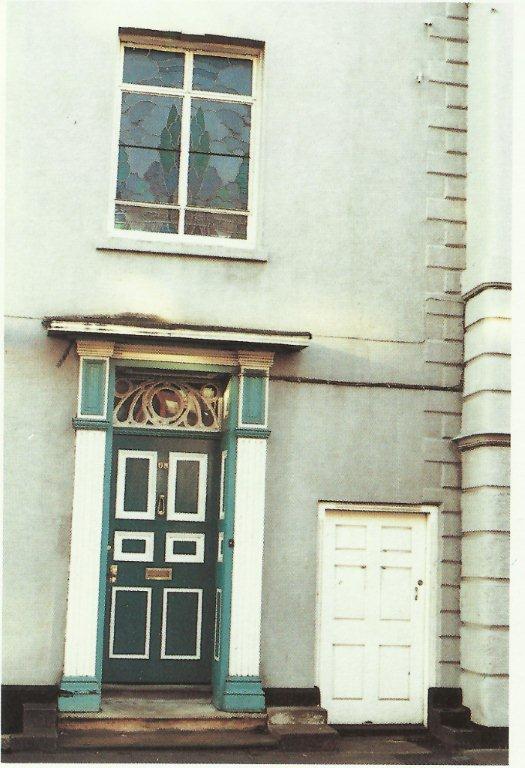
The Front Door 44 Derngate
Main school finally released us from the dreaded hats! It was a big change for us and the school buildings felt very big and confusing. Through the lower part of the school there were two forms per year group with about twenty five pupils in each form, but when we got to main school there were three forms per year group with about thirty pupils in each form. Our numbers were swelled by pupils from county schools who had passed their eleven plus exam and gained a place at the school under the government direct grant scheme. Much to my relief I was not able to sit the eleven plus because I lived in the borough, I don’t know if the borough had already abandoned the eleven plus or if those who passed were sent to a different school, but only county pupils came to our school.

Platform shoes were in fashion at that time and I’d had my first pair of shoes with a (very small) platform the previous year when I was a Towerfield pupil. I had a new pair of shoes for the start of the new term in main school, they had a slightly higher platform and I was very pleased with them but I was less pleased with the rest of my uniform. My mum had made sure that I had everything I needed for school; during the holidays we’d made our usual trip to Sanderson’s and I had endured the usual ordeal of trying on countless garments to ensure that I had sufficient room for growth.  I had two new skirts, white blouses, two jumpers, a new blazer and a new winter coat as well as an aertex shirt, wrap over skirt and a track suit for PE, all with neatly sewn name tags. At the time I had no idea how expensive the uniform must have been or how much time it must have taken my mum to sew all those name tags into my clothes, I must have seemed so ungrateful.  When the term started one of the new girls called Sally had a lovely fashionable skirt with a hemline a couple of inches below the knee.  I longed to have a skirt like hers, but I knew that it would be ages before I grew out of my new skirts. I had to wait a whole year before I was allowed to buy a more fashionable skirt for school. 

Dunlop Blue Flash
Slide Rule
As well as the new items of uniform, my kit list included a hockey stick, hockey boots and a tennis racket (with cover and press), so after our trip to Sanderson’s we went to Collins Sports shop in Gold Street to buy the sports equipment. I wonder if my mum knew what a waste of money they would prove to be, I was absolutely useless at tennis and I detested hockey. There was one other item of essential equipment that we had to buy, a slide rule for maths lessons. It was very well made and it came in a rigid plastic case. I liked maths a lot better than sport and I became quite fond of my slide rule.


The School Gates
Each morning we would enter the school through the big blue double gates on Derngate and walk down the ramp into the cloakrooms which seemed to be under the school. Mr Powell who taught Biology was my Upper Third teacher; our classroom was the Biology Lab at the top of the science block which was a modern building on the Albion Place side of the school grounds. At the back of the room there were glass fronted cabinets with assorted specimens preserved in jars. We got plenty of exercise going up and down stairs and walking to and from the various school buildings for our lessons, but it wasn’t a hardship we just got on with it. We had so much to learn, there were stairs for going up and not down and vice versa, there were doors which we were not allowed to use and there was a lawn which we were forbidden to walk on, but we soon got used to the school routines. Like most pupils I was afraid of Miss Lightburn our headmistress, and in awe of her deputy Miss Harrison, but I can honestly say that I only remember one teacher being unkind and unfair, and she didn’t last very long.

The School Hall
We had prayers every morning in the assembly hall; it was a very formal event. When we had all filed into the hall Miss Lightburn entered through the glass doors at the back of the hall and walked briskly to the stage with the head girl trotting along behind her. We usually began with a hymn, my favourites were ‘Oh Jesus I have promised’ and ‘When a knight won his spurs in the stories of old’. Then there would be a Bible reading a few words from Miss Lightburn and a prayer. At that point the glass doors at the back would be opened and the late comers would file in (trying not to notice Miss Lightburn’s disapproving stare) before the notices were read. 

In the Lower Fourth we discovered the pleasures of Latin with Mr McNicholas, he was as tall as Mr Powell was short, and he was exceptionally clever, I liked him but I wasn’t so sure about Latin. The stories about Caecilius and his family in our Latin text books didn’t really interest me, they seemed to be mostly about slave girls, werewolves and a dog called Cerberus. The Lower Forth also brought us the joys of Domestic Science lessons, definitely not my favourite part of the week. The Domestic Science Room was below the Art Room in the Cripps Block - a modern uninspiring building in the lower part of the school grounds near Victoria Promenade. It was torture to me to be so close to the Art Room as I would much rather have been in an art lesson. Domestic Science was unbelievably boring and when we were allowed to cook we were forced to make things that we would never eat and never cook again. One of the first things we cooked was Eggs Mornay, my family were used to good plain food, not ‘messes up stuff’ as my grandmother would have called it. I also recall making lemon curd; I have never made it again since then. Thankfully we made choices about our O Level subjects at the end of the Lower Forth and I dropped my least favourite subjects, Chemistry and Domestic Science. Oddly I quite liked Physics and Biology but I hated Chemistry.

The back of 44 Derngate
My Upper Fourth classroom was the Geography room, a bright airy room in the main school building with French doors leading out to the garden. I remember that one day I accidentally stapled my thumb during a Geography lesson, but I was so afraid of Mrs Durham our Geography teacher that I chose to suffer in silence with the staple stuck in my thumb rather than admit that I had been fiddling with my stapler. I later found that Mrs Durham had a very kind heart. 

It was during our Upper Forth year that some of the girls began to have boyfriends and to go to discos. Looking back I think some of the girls who had come from mixed primary schools were a lot more comfortable with boys than those of us who had attended a single sex school since we were four years old. I had no time for boys, when I wasn’t at school I spent most of my time riding and taking care of my horse. I couldn’t see why some of my friends found scruffy lads in smelly Afghan coats attractive - I had a keen sense of smell and those coats stank, especially if it had been raining  

The Lower Fifth year was wonderful, we had the cellar classroom, I loved that room, it was tucked away beyond our cloakrooms at the end of a gloomy corridor, it felt almost dungeon like in the corridor, but the classroom felt special, it was our room tucked away from the hustle and bustle of the school and no one came to bother us. Mrs Haynes was our class teacher, she taught one of the less able French groups and I made quite sure that I got into her group and stayed there, she was a fantastic teacher. Mrs Vestergaard who was head of French, taught me for the first two years in main school. She was a very elegant woman and I don’t recall her ever shouting at us or telling us off sternly, but for some reason I found her terrifying, I didn’t enjoy being in her French group and I was much happier when I was moved into the other group.

Fiona, me, Fiona and Caroline
The uniform changed slightly at the start of the Lower Fifth year, we kept our navy skirts but our ties and white shirts gave way to open neck blue blouses worn with blue jumpers. We also had very nice winter coats. I was pleased by the change, but the blouse (which had to be bought from Sandersons) proved very challenging to wear. The blouse had a stiff collar which was not intended to be worn open without a tie and my short neck made matters worse, it was a constant battle to prevent the collar from touching my ears!

I was sad to leave Mrs Haynes and our cellar classroom, but the Upper Fifth year, spent in one of the mobile classrooms with Miss Williams was a good experience. The mobile classrooms were fairly new and very pleasant, tucked away in the beautiful school grounds. I had known Miss Williams since kindergarten, but I only found out she was human when she was my form teacher - she was superb. She was a PE teacher with a boundless enthusiasm for sport (which didn’t endear her to me) but she was also a very good geography teacher, I enjoyed her lessons and I can still remember many of the mnemonics that she taught us to help us to remember important information.

I did not enjoy gym and dance lessons because even in the senior part of the school we had to wear horrible aertex blouses and navy blue knickers, which made me feel very exposed. For hockey, netball, tennis and other outdoor games we wore short wrap over skirts. Our playing fields were at the bottom of Church Way so we were taken there by coach, for hockey in the winter months and athletics in the summer. It is hard to choose which I liked least! The worst part of all was that we had to change on the coach in order to save time, I am sure such things would not be allowed these days. Every item of clothing and PE kit had to be named with an embroidered name tape sewn on neatly – a very time consuming job. I don’t remember this being checked at Spring Hill but further up the school, we had regular inspections to ensure that all our clothing was labelled.

It is hard to say that I had a favourite teacher, because there were a number of interesting and inspirational people at the school. I still remember many of my teachers with affection and gratitude. The unforgettable Mr Fiddes taught art, he was a very good teacher, I loved his lessons and I realise now that as well as sharing very sound advice, he taught us to think for ourselves and to have the confidence to express our opinions.  Miss Elliott-Binns who taught Divinity (and so much more!) was an amazing lady, she never shied away from difficult questions and her answers showed surprising insight and understanding. I remember Father Fred Baker; he was the school chaplain and Rector of St Edmunds church. He used to take us for very occasional lessons, I am not sure what for, but I remember he told good jokes and could stand on his head. I remember Miss Smith who taught English (and despaired of my spelling) because she introduced us to poets and authors that I still enjoy reading, John Betjeman, Ted Hughes, James Kirkup, Charles Causley, Saki, E M Forster, Katherine Mansfield, D.H. Lawrence and many others.

I have so many memories of school life. On Ascension Day we all walked to All Saints Church for a special service which always included the hymn 'Praise to the Lord the Almighty the King of Creation'. Every year I seemed to end up sitting behind a pillar! We had the Gift Service before Christmas when we all brought toys. For reasons that were never clear to me we always sang 'O Come all Ye Faithful' in Latin. When the weather was too bad for us to go outside for games we sometimes played French cricket in the hall and at the end of term games lessons were abandoned in favour of 'shipwreck’ in the gym. Another end of term ritual was cleaning our desks, we had to bring in our own polish and a duster. Perhaps my best memories are of ordinary days, sitting in the area outside the gym enjoying a hot chocolate from the drinks machine on a cold day and sitting in a shady spot in the garden on a hot summer day. In my Upper Fifth Year taking my turn to run the Spine and Jacket book shop at lunchtimes (under the watchful eye of Mrs Tresias). Most of all I remember the people, inspirational teachers, the gardener who kept the grounds looking beautiful, and my friends. 

The school grounds c1920s were little changed in 1970s
Derngate was a happy, friendly place, Mr Fiddes once described it as an ivory tower and of course he was right, but I am grateful for those years. For me school was a safe, protected and predictable environment at a time when my home life was dominated by worry and uncertainty. A lot was expected of us but I think that was a good thing for me, I probably needed to be pushed in order to do my best, but school wasn’t just about results. I did better than anyone expected in my exams but more importantly I left school with a wealth of poetry in my head, passion for history, a love of art, a desire to read and a need to write, and all those things have remained with me ever since.

Wednesday, July 11, 2012

A 1960s Childhood in Northampton – Part 4 School Days (Primary School)

Spring Hill
I didn't want to go to school, I was perfectly happy at home, I wasn't used to spending time with other children and my first weeks at school were frightening and upsetting. The school that my parents had chosen was Spring Hill in Cliftonville (it was the junior department of Northampton High School for Girls). At the time it felt very big and frightening, but it wasn't really. It was a beautiful house with a big gravel drive and a lovely garden. Cliftonville was very different and much quieter in those days, there were allotments stretching back towards the Bedford Road on the land which is now occupied by Northampton General Hospital.


In summer we wore red, yellow or green gingham check dresses, a blazer, a Panama hat and white gloves. At first the winter uniform consisted of a navy blue skirt, navy cardigan, white shirt, a school tie, navy gabardine raincoat, a navy hat and navy gloves. Thankfully they changed the uniform after a year or two, to a much more practical blue pinafore dress worn over a mustard coloured turtle neck jumper with a Harris Tweed coat instead of the gabardine raincoat, so I was released from the worry of ties until I moved up to Towerfield. Our uniform had to be bought from Sanderson’s on the Kettering Road, I didn’t enjoy going there, the uniform was expensive and it had to be bought with plenty of growing room so it always involved trying on lots of different sizes and lengths which I detested. We had to buy our shoes from Jones in St Giles Street, which was another ordeal; we had to have indoor shoes, outdoor shoes, black gym shoes and dancing shoes. As I progressed through the school the uniform requirements relaxed a little, but I vividly remember how much I hated my first pair of indoor shoes. They had buttons on rather than a buckle and at age four I couldn’t manage the button on my own. Our school books were also bought from St Giles Street, from a shop called Savages which was not far from Lawrences. I rather liked going to that shop, I could have stayed there all day looking at the books.


Spring Hill
I was terrified of Miss Beasley the headmistress of Spring Hill, but I remember other teachers more fondly. It was a girls’ school, but a few boys attended until the age of seven; we had two boys in our class. In Kindergarten we only went to school in the mornings, and then when we progressed to Upper Kindergarten we stayed for two afternoons as well. From Transition onwards we had one half day each week. Most of us lived too far away to go home for lunch so we had to stay at school. Lunch was a very formal affair with all sorts of rules to be observed, we had to have our own napkins and napkin rings. We could ask for 'small' or 'ordinary' helpings and selected second form pupils (age eight) took turns as servers. The meals were quite nice really but as far as I was concerned Friday was the worse day, fish in parsley sauce with potatoes and mushy peas! I have always detested mushy peas and fish in parsley sauce was not among my favourite meals. After lunch we had ‘rest’ we walked across to the annex and after queuing to collect our rugs from the rack outside the cloakroom we went to the hall, unrolled our rugs and lay down to rest. When we were all settled stories were read to us by the teacher on duty; The Borrowers, Milly Molly Mandy, Dr Doolittle, Sam Pig, The Country Child, 101 Dalmatians, The Moomins, My Naughty Little Sister, Paddington Bear, Little Grey Rabbit and so many more good books. I loved them all and I can remember them very clearly so many years later. Rest supported the formal process of learning to read by nurturing a less formal enjoyment of books.


Our school day was regulated by the shiny brass bell with a wooden handle which stood on the table outside the staff room. At the end of each lesson a second form pupil would be given the coveted task of ringing the bell. The worst part of Spring Hill was music lessons with Mrs Willson who seemed to be at least a hundred years old. She stood us in a semi-circle and graded us according to our singing ability. I was always among the 'growlers' at the end of the row and I have detested music ever since. I loved handwork lessons; we did sewing - making such things as oven gloves and needle cases, weaving, raffia work, painting, making models with pipe cleaners, papier-mâché and junk modelling. I remember spending a whole afternoon making butter in a jam jar.The nature table kept us busy all year round. In spring we collected spring flowers, sticky buds and catkins. Then as spring reached into summer we saw tadpoles emerge from the frog spawn that we had collected. We watched fascinated as the tadpoles grew and gradually became frogs, then it was time for them to be taken back to the pond or stream that the frogspawn had come from. We collected feathers, fragments of birds’ eggs, scraps of sheep’s wool, caterpillars, sea shells, and even empty wasps nests. The darker evenings and cooler days of autumn gave us an endless supply of fallen leaves in rich autumn colours, we made displays of leaves and we used them in our art work. We collected acorns, conkers, berries of every kind and sycamore seeds that fluttered down from the tree spinning like tiny helicopters. As autumn gave way to winter we collected pinecones, honesty and other dried seed heads, glossy holly leaves and bright red berries. In Transition we kept silkworms in the classroom.


In those far off days when the government was too busy dealing with other matters to meddle with education, my school nurtured a love of books which has remained with me ever since. When I first started school at the age of four I wasn't too keen on learning to read, I had no need to read because I had a ready supply of adults to read to me. We had little red check gingham bags which hung on the backs of our chairs to hold our reading books. The Happy Venture reading scheme was deeply uninspiring, the books were about Dick and Dora, their friends May and Jack and their dog Nip. I suspect those books came out of the ark because as a child growing up in the 1960's I didn't know any children called Dick, Dora, May or Jack, I didn't identify with them and I couldn't care less about what the words meant because it was so boring. Who in their right mind would call a dog Nip, it is asking for trouble! We had better reading books later on, I think those were called Wide Range Readers, finally there was something worth reading and suddenly I could read. We also read poetry in class every week, I enjoyed it and I wanted to be able to read the words in the book (which I think was called Rhyme and Rhythm) so that I could read the poems again and again. The poems were fun, one of my favourites was called When Daddy Fell into The Pond by Alfred Noyes, but best of all was the Spike Milligan poem The Ning Nang Nong. As well as promoting a love of words and a desire to read, these early adventures provided a wonderful foundation on which a lasting love of poetry was built.


The school day always began with prayers in the hall. As we filed into the hall class by class Mrs Mossman played Men of Harlech on the piano. I don’t remember much about Prayers except that we always sang a hymn, my favourite at that time was ‘He who would valiant be’ and my least favourite was ‘God be in my head’. I think we had a Bible reading and a prayer as well but I really don’t remember. At the end of each school day we would line up in our classroom and our teacher would lead us across to the hall where we sat cross legged in the care of the teacher on duty until our mothers came to collect us. Then we when our names were called we had to walk across to the teacher, say ‘Good afternoon Mrs xxxx’ and hold out our hands to show that we were wearing our gloves (white for summer, navy for winter) and hats, before we were allowed to leave.

A couple of times each year we put on our hats and coats (and gloves of course) and walked two by two along the Billing Road to ‘main school’ in Derngate. The ‘toy service’ took place shortly before Christmas, it was a whole school carol service and we all took gifts of toys to donate to charity. To me it was an ordeal, main school was big and frightening and we had to spend weeks learning carols and practicing for the toy service. Sports day took place towards the end of the summer term on in the ‘main school’ grounds alongside Victoria Promenade. It was a very formal affair; our parents were seated in rows in the shade of the copper beech tree and the teachers were all in their best clothes. We had to practice the races for weeks before the big day; we even had to practice walking up to receive the winner’s ribbon and shaking hands. For me practice did not make perfect, I didn’t win any races so I was spared the worry of remembering how to shake hands properly.


I have lots of good memories of Spring Hill but perhaps the most enduring memory is the smell of TCP and the row of pupils with cut knees sitting in the First Form cloakroom waiting to have their knees bathed after falling over in the playground.


Towerfield
At age 9 we left Spring Hill behind and moved to Towerfield in Derngate. The two years that I spent there were among the happiest of my school career. We referred to that part of the school as Towerfield, but it actually consisted of two connected buildings, 66 Derngate (Towerfield) and 68 Derngate. They were wonderful old building with so much for inquisitive young girls to discover. There was a speaking tube and a dumb waiter between Miss Thornton’s classroom (on the ground floor in 68 Derngate) and Mrs Nichol’s room (above). If you entered the building at street level you had to go downstairs to reach the garden. There were cloakrooms downstairs in what were perhaps the old kitchens in 68 Derngate and there was a garden room below 66 Derngate. The gardens, which had retained some of their former charm, included a fish pond and a monkey puzzle tree. Beyond the paved area near the garden room some steps led down to a long narrow lawn where we played in summer. There were still one or two private houses between Towerfield and main school, but a path bordered by an old brick wall led along the right hand side of the Towerfield garden and around the back of the private gardens to the main school grounds. This enabled us to get to the main school without going out onto the street, but when we went to our music lessons at Beckett House on the corner of Victoria Promenade we had to walk along the pavement to get there


I loved 68 Derngate best of all
We first met Mrs Nichol in Towerfield, she had a low, strong voice and a certain style and presence. She taught 'Speech'. We had to write out and learn a poem every fortnight, then in the lesson we took turns to stand up and recite our poem to her and the class while she marked the exercise book. Her marks were not generous, but just occasionally everything went well and she gave an A*. We soon learnt not to get into her bad books. She was firm, but fair and she knew how to get the best out of people. My parents paid for me to have ‘Extra Speech’ lessons with her as well. We had to work hard, but I enjoyed working for Speech and Drama examinations. I perhaps didn't recognise it at the time, but Mrs Nichol played a significant part in my education and I have a lot to thank her for. I am grateful that we were required to learn so much good poetry by heart. I have kept my 'Poems for Pleasure' books from Towerfield days and they are among my most treasured possessions.


Mrs Noikavitch was my teacher for the first year at Towerfield, I liked her. Her room was upstairs in 66 Derngate; from the front window we could look across the road towards the veterinary surgery of Sutton Steel and Holmes (where an office block now stands) and from the back window we could look out over the gardens and the tennis courts, past the Cripps Block to Becket’s Park and beyond. Mrs Lett taught us history and biology, I liked both subjects but she made us copy notes from the board at top speed, you had to write very fast because when she ran out of space the notes would be rubbed off and written over. My worse memory is being made to run from school to the Mounts for swimming lessons, it was all uphill and we had to run through the derelict streets near the Mounts that were awaiting demolition. I was so pleased when later in my school career the pool at the hospital Cripps Centre was used for swimming instead; at least we didn’t have so far to run.


78 Derngate
I did not enjoy music lessons, but the music department was based in Becket House on the corner of Victoria Promenade and I became very fond of that building, it had bunches of grapes in the coving. I wish I had taken more notice of the wonderful buildings that were part of our school, but perhaps I was too young to appreciate them. 78 Derngate (the Charles Rennie McIntosh house) was owned by the school at that time and the downstairs room was used as a classroom. I didn’t have any lessons there, but I walked past it almost daily and I must have been into that classroom at some time or other, but I didn’t give it a second thought.


The Dining Room 78 Derngate was a school room

My second year at Towerfield was spent in Miss Thornton’s class. I missed the warm caring nature of Mrs Noikavitch, but Miss Thornton was interesting in a stiff and starchy sort of way. She sometimes took us out to explore forbidden parts of the garden and she told us about previous pupils that she had taught. I was amazed to find that Caroline Bradley (an international show jumper and one of my heroes at that time) had not only attended Northampton High, she had been taught in our classroom and had sat at one of our desks. Our desks were ancient, double desks made of heavy wood with bench seats and desk lids that opened up so that we could keep our books inside. Each desk had an inkwell and a groove along the top for pens. When we moved from Springhill to Towerfield we no longer wrote in pencil, we had to have an Osmiroid fountain pen. At the start of each term a brand new piece of pink blotting paper was issued to each pupil and we were expected to write neatly in our unlined exercise books, without blots. The inkwells were collected on a big wooden tray each week by the ink monitor and refilled with ink from a large bottle. We had monitors for everything, a door monitor to open and close the door when teachers or visitors came to the door (we had to stand whenever an adult entered the room), a book monitor to hand out and collect exercise books, a milk monitor to distribute our daily bottle of milk, and the most coveted job of all, a bell monitor who had to ring the hand bell which stood on a table in the entrance hall of 66 Derngate, at the end of each lesson.

At Spring Hill I was taken to and from school by car, but when I moved to Towerfield I was expected to travel home by bus. On the days when I went to my parents shop I caught the 6, 6A or 12 bus from George Row to St James. On other days I caught the number 8 bus, (I think from Wood Hill, but I’m not sure) to Landcross Drive. Several of us caught that bus and then walked together along Abington Park Crescent to our homes. Unfortunately there was not safety in numbers, the girls from Abington Vale School would surround us, grab our hats and throw them into the road to get run over. We were too scared to remove our hats, it was a terrible ‘sin’ to be spotted by a teacher in uniform without a hat on, but having our hats damaged made our parents angry because they were costly to replace. When I was a bit older, I caught the number 1 bus home instead because it was safer.