Showing posts with label 1970s. Show all posts

Thursday, September 27, 2012

My Life Story by Elaine Dente (nee Horne)

Hi everyone, my name is Elaine Dente (nee Horne). I was brought up in Kings Heath, went to Kings Heath infant & junior schools. My early memories of my infant school was walking in the gate and all the mums were talking about a fantastic new rock & roll singer called Cliff Richards who had just made a song called Living Doll. I was so excited when my mum took me to see him in the film Summer Holiday. I really enjoyed my three years at the infants school, we mostly did painting and drawing and remember there was a big shell filled with sand in all the classrooms that we spent hours playing in.


I also remember that on Sundays the Salvation Army would go round Kings Heath estate playing their band and singing to collect money for charity, I was only 5 at the time. They would stop on the green opposite my house and when they stopped playing they would ask if anyone would like to sing for them. Well my mum had taught me “Jesus wants me for a sunbeam” so I volunteered to sing this in front of a big crowd of onlookers, I sang it all the way through and everyone applauded me and the lady in the S.A. asked me to collect the money, so I went to everyone and they gave me a little basket to put it all in, when I finished I said thank you very much to everyone and started to walk home with it, I thought they had given it to me NOT charity, a lady came running after me, she took it back but gave me sixpence to get some peps.


Kings Heath Junior School about 1963
Later I then joined Kings Heath Junior school and also liked being there apart from when I was talking too much and Miss Ward hit me on the back of the knee with a ruler, she used to get quite a kick out of doing that to the children, needless to say she wasn’t very popular in the school but went on to teach there for many years.


Through my Junior School years my best friend was Denise Thompson (Beckwith now) who is also a NP member and she was the one who suggested me to the group, (I will be fore-ever grateful to you Denise. Denise and I played every evening after school at different games, rounders, hide & seek, throwing tennis balls against the wall, jacks, hop-scotch, and we played outside until our mums called us for our tea.


Kings Heath (I'm on the bike)
We used to go up the firs and pick mushrooms and blackberries with Denise’s dad, and our treat on a Saturday afternoon would be when they invited me to their house to eat a big bowl of winkles, they were fantastic.


As I got a little older I joined Kings Heath Youth Club on the park and always remember the number one hit was Tom Jones, It’s not unusual. We had great times there.


We then went to different Senior Schools, Denise went to St. Georges and I went to Spencer, my idol at the time was Twiggy and every spare minute I got I would draw her or cut her out of magazines, my favourite groups were of course The Beatles and couldn’t wait for my birthday and Christmas to get their album. I was always getting sent out of the class at Spencer especially in the maths lesson as I hated maths and would talk and joke all the way through it, and every time I was standing outside the class who would come walking along but Miss Nash the Headmistress. The biggest shock of all that happened to me at Spencer was when I was about 13 and I was on the bus going back to Kings Heath from school, and a friend of mine didn’t have any money to get home so as there were no mobiles then to call her mum I said I would let her have my school bus pass after I had shown it. Well I was just handing it to her when the conductor saw me and took my details down and reported me to the school. The next day my mother got a phone call from Miss Nash asking her to come to the school, I was there in her office when mum arrived and Miss Nash said that as I was disrupting the class by talking and joking and the incident on the bus, she was going to expel me. My mother gave me a glare and turned to Miss Nash and said you won’t have to expel her because when I have finished with her she will be the best behaved girl in the school, well you can imagine what I was expecting, my mum had never hit me before but I was expecting something and it wasn’t going to be a pat on the back. We left the school and my mum literally chased me from the school in Dallington to Kings Heath with her foot up my backside literally pushing me along to Kings Heath, up the stairs and into bed. Yes she was right my mum, I was one of the best students in the school after that, it certainly taught me a lesson. 

We would always go “up town” on Saturdays and go for a drink at the Desert Inn and then walk round town, up and down Abington Street, sometimes if we had saved our pocket money we would treat ourselves and go to Adnitts for a Knickerbocker Glory or College Street Fish & Chip Shop.


I used to love shopping on the market and it was always completely full on Wednesdays, Fridays and Saturdays, you could get everything there. Whenever I had some spare pennies I would buy a Gallones, chocolate nougat wafer was my favourite, I still go there and have a Gallones when visiting the town.

When I was 15 I decided that I didn’t want to stay on at school to do my GCE’s but preferred to go out and earn a living. At the time for the girls who were going to leave, an employment officer would go round the schools to ask what jobs we were interested in, when he got to me I said I wanted to become an actress, he gave a snigger and asked me if my mother would allow me to go to London on my own at 15 to attend drama classes (there were none in N’pton.) I thought about it for a few seconds and said I didn’t think so, he then told me to think of another career. I was so very very disappointed.


My maxi dress age 17
Has luck had it my cousin knew the Personnel Manager at Express Lifts and they needed an office junior so I applied for the job and got it, I started off do filing etc. and then the company sent me twice a week to the Northampton. Technical College in St. Georges Avenue to do a secretarial course. I passed my exams in typing, then shorthand and I worked my way up to Secretary in the Personnel Department. I remember when I was about 17, hot pants were the new fashion and me and my friends started to wear them for work. One day I had to take some documents into the Drawing Room where there were about 200 drafts-men working, when I walked in the whole place just stopped working and were whistling, I remember I literally went the colour of a tomato and put the papers I had in my hand in front of my face and I walked into a desk!! I have never been so embarrassed in all my life. If it happened now it wouldn't be an embarrassment it would be a bloody miracle!


taken at Express Lifts
After 5 years I left Express and went to work for Avon Cosmetics as Secretary in the Personnel Department. While working there the Managing Director of the World Headquarters in New York visited and I met him and told him I would be visiting my relatives in New York in 3 weeks from then so he arranged for me to be met and shown around their brand new building in Manhattan, it was a lovely experience and Avon Northampton put a photograph of me on their newspaper saying I was the first employee from the U.K. to visit their new H.Q. in New York, which was a great honour at 19 years old.


Lings Forum 1977.
I then saw a very good job come up for a personal Secretary to the Transport Manager of the Northampton Transport down St. James and I worked there a year before applying for another job on the council as “Girl Friday” for the Leisure & Recreation Department, this was such a fantastic job as I got to work in the Tourist Information Office, Teaching babies to swim in the mother & tots group at the Mounts Swimming Baths, Hostessing at any concerts in the town looking after the celebrities and V.I.P.’s and Hostessing at the Northampton Town Show in Abington Park. I really loved my job. Then the Lings Forum was being built and I felt I would like a change so I applied for the Secretary’s job and was accepted, this was another great job organising sporting events, wedding shows, health & beauty evenings, professional wrestling nights and music concerts, after 5 years I wanted a change so applied to Diversey in Weston Favell as Executive Secretary and got the job.


The first time I went to a disco was at the Gaye Way at the top of Abington Street, then I started to go to all the different discos in the town: The Salon, the 66 club in Giles Street, the Drill Hall, Two Much Club, Fantasia, Cock Hotel, Blisworth, Nags Head, Sywell, Billing Acquadrome, Shades, The Plough Hotel, The Angel, The Grand, Cinderellas, Circles, The Windmill (where I met my husband), my favourite pub was The Abington Park Hotel. I really loved the 70’s in Northampton, they were the best years of my life.


When I met Pope John Paul 1981.
During my last year at Lings Forum I met my boyfriend who is now my husband and after a year of “courting” he decided he wanted to return to live in Italy (he was born there but emigrated when he was 8 to the U.K.) so we split up and I decided to also leave the town and get a job as a Nanny in Rome. I rang him to say I was also going to live in Rome, so we decided to go back together. I worked for Roman Aristocrats and they had a n enormous house in the centre of Rome. It was a dream job and we went to their villa on an island between Sicily and Africa for the summer and to their wonderful chalet in the dolomites in the Winter. Every weekend we would go to their 200 room castle in Rocca Sinibalda near Rieti just an hour away from Rome, which was like living in a dream. I had a really wonderful time living with this family and I also got to meet Pope John Paul while working for them as they had a private invitation to a church he was visiting and I met him, he spoke to me in English and blessed me which was very emotional for me.


rocca sinibalda
After 18 months with the family I returned to Northampton to organise my wedding (as my boyfriend popped the question at the Trevi Fountain and gave me an engagement ring (very romantic), We got married at the Cathedral in the Barrack Road and then had our first night’s honeymoon at the Saxon Inn. We then drove the next day to the Cotswolds for a few days and then said goodbye to our families and drove to Rome and we have been here ever since. We celebrated our 30th wedding anniversary on 5th June this year (married in 1982). And to celebrate in style we are going on a 20 day cruise to Asia on 5th October this year.


jubilee day
I have settled down well on the coast of Rome between Ostia and Anzio and made a lot of friends both English and Italian. 21 years ago I founded an ex-pats club of ladies from the U.K. America, South Africa, Australia etc. and there are nearly 50 of us. I organise “girls nights out” every two months and we go for a meal, (it’s usually at the local Chinese as we eat Italian and English at home). I am a housewife in the mornings and I teach English to students in the afternoons, it’s surprising how many Italian children are walking around with a Northamptonian accent, me duck!.


Ex pats club
My husband Jim is a Carabiniere (Policeman) and I have two wonderful children, Riccardo who is 29 and Cristina who is 26 and a lovely 15 year old Cavalier Kings Charles Spaniel Nicki who we brought over from the U.K. My hobbies are chatting to friends on Northampton Past page, reading, taking photos, cooking, making cupcakes and venturing out with my husband and friends on Saturday nights for a meal and Sundays on their scooters travelling around the region of Rome (Lazio) We also love cruises and will be celebrating our 30th wedding with a cruise to Asia on 5th October, although our anniversary date is on 5th June.


I must say I have had a wonderful life, and it is made it even more pleasurable to be able to chat to so many Northamptonians on the NP page and feel right at home again and I don’t feel I’ve been away. Thanks to Frank Baverstock for starting up the page and to all him and his Admin. Team for all their hard work.


Elaine Dente (nee Horne)


Sunday, July 22, 2012

A 1960s Childhood in Northampton – Part 5 School Days (Senior School)

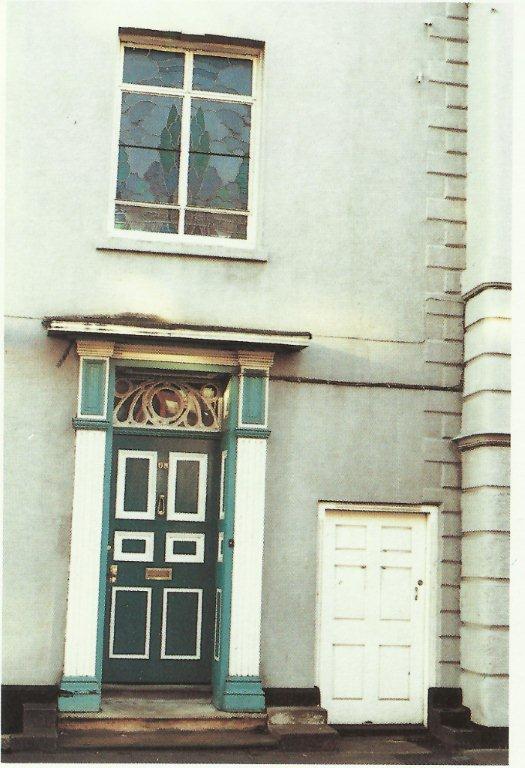
The Front Door 44 Derngate
Main school finally released us from the dreaded hats! It was a big change for us and the school buildings felt very big and confusing. Through the lower part of the school there were two forms per year group with about twenty five pupils in each form, but when we got to main school there were three forms per year group with about thirty pupils in each form. Our numbers were swelled by pupils from county schools who had passed their eleven plus exam and gained a place at the school under the government direct grant scheme. Much to my relief I was not able to sit the eleven plus because I lived in the borough, I don’t know if the borough had already abandoned the eleven plus or if those who passed were sent to a different school, but only county pupils came to our school.

Platform shoes were in fashion at that time and I’d had my first pair of shoes with a (very small) platform the previous year when I was a Towerfield pupil. I had a new pair of shoes for the start of the new term in main school, they had a slightly higher platform and I was very pleased with them but I was less pleased with the rest of my uniform. My mum had made sure that I had everything I needed for school; during the holidays we’d made our usual trip to Sanderson’s and I had endured the usual ordeal of trying on countless garments to ensure that I had sufficient room for growth.  I had two new skirts, white blouses, two jumpers, a new blazer and a new winter coat as well as an aertex shirt, wrap over skirt and a track suit for PE, all with neatly sewn name tags. At the time I had no idea how expensive the uniform must have been or how much time it must have taken my mum to sew all those name tags into my clothes, I must have seemed so ungrateful.  When the term started one of the new girls called Sally had a lovely fashionable skirt with a hemline a couple of inches below the knee.  I longed to have a skirt like hers, but I knew that it would be ages before I grew out of my new skirts. I had to wait a whole year before I was allowed to buy a more fashionable skirt for school. 

Dunlop Blue Flash
Slide Rule
As well as the new items of uniform, my kit list included a hockey stick, hockey boots and a tennis racket (with cover and press), so after our trip to Sanderson’s we went to Collins Sports shop in Gold Street to buy the sports equipment. I wonder if my mum knew what a waste of money they would prove to be, I was absolutely useless at tennis and I detested hockey. There was one other item of essential equipment that we had to buy, a slide rule for maths lessons. It was very well made and it came in a rigid plastic case. I liked maths a lot better than sport and I became quite fond of my slide rule.


The School Gates
Each morning we would enter the school through the big blue double gates on Derngate and walk down the ramp into the cloakrooms which seemed to be under the school. Mr Powell who taught Biology was my Upper Third teacher; our classroom was the Biology Lab at the top of the science block which was a modern building on the Albion Place side of the school grounds. At the back of the room there were glass fronted cabinets with assorted specimens preserved in jars. We got plenty of exercise going up and down stairs and walking to and from the various school buildings for our lessons, but it wasn’t a hardship we just got on with it. We had so much to learn, there were stairs for going up and not down and vice versa, there were doors which we were not allowed to use and there was a lawn which we were forbidden to walk on, but we soon got used to the school routines. Like most pupils I was afraid of Miss Lightburn our headmistress, and in awe of her deputy Miss Harrison, but I can honestly say that I only remember one teacher being unkind and unfair, and she didn’t last very long.

The School Hall
We had prayers every morning in the assembly hall; it was a very formal event. When we had all filed into the hall Miss Lightburn entered through the glass doors at the back of the hall and walked briskly to the stage with the head girl trotting along behind her. We usually began with a hymn, my favourites were ‘Oh Jesus I have promised’ and ‘When a knight won his spurs in the stories of old’. Then there would be a Bible reading a few words from Miss Lightburn and a prayer. At that point the glass doors at the back would be opened and the late comers would file in (trying not to notice Miss Lightburn’s disapproving stare) before the notices were read. 

In the Lower Fourth we discovered the pleasures of Latin with Mr McNicholas, he was as tall as Mr Powell was short, and he was exceptionally clever, I liked him but I wasn’t so sure about Latin. The stories about Caecilius and his family in our Latin text books didn’t really interest me, they seemed to be mostly about slave girls, werewolves and a dog called Cerberus. The Lower Forth also brought us the joys of Domestic Science lessons, definitely not my favourite part of the week. The Domestic Science Room was below the Art Room in the Cripps Block - a modern uninspiring building in the lower part of the school grounds near Victoria Promenade. It was torture to me to be so close to the Art Room as I would much rather have been in an art lesson. Domestic Science was unbelievably boring and when we were allowed to cook we were forced to make things that we would never eat and never cook again. One of the first things we cooked was Eggs Mornay, my family were used to good plain food, not ‘messes up stuff’ as my grandmother would have called it. I also recall making lemon curd; I have never made it again since then. Thankfully we made choices about our O Level subjects at the end of the Lower Forth and I dropped my least favourite subjects, Chemistry and Domestic Science. Oddly I quite liked Physics and Biology but I hated Chemistry.

The back of 44 Derngate
My Upper Fourth classroom was the Geography room, a bright airy room in the main school building with French doors leading out to the garden. I remember that one day I accidentally stapled my thumb during a Geography lesson, but I was so afraid of Mrs Durham our Geography teacher that I chose to suffer in silence with the staple stuck in my thumb rather than admit that I had been fiddling with my stapler. I later found that Mrs Durham had a very kind heart. 

It was during our Upper Forth year that some of the girls began to have boyfriends and to go to discos. Looking back I think some of the girls who had come from mixed primary schools were a lot more comfortable with boys than those of us who had attended a single sex school since we were four years old. I had no time for boys, when I wasn’t at school I spent most of my time riding and taking care of my horse. I couldn’t see why some of my friends found scruffy lads in smelly Afghan coats attractive - I had a keen sense of smell and those coats stank, especially if it had been raining  

The Lower Fifth year was wonderful, we had the cellar classroom, I loved that room, it was tucked away beyond our cloakrooms at the end of a gloomy corridor, it felt almost dungeon like in the corridor, but the classroom felt special, it was our room tucked away from the hustle and bustle of the school and no one came to bother us. Mrs Haynes was our class teacher, she taught one of the less able French groups and I made quite sure that I got into her group and stayed there, she was a fantastic teacher. Mrs Vestergaard who was head of French, taught me for the first two years in main school. She was a very elegant woman and I don’t recall her ever shouting at us or telling us off sternly, but for some reason I found her terrifying, I didn’t enjoy being in her French group and I was much happier when I was moved into the other group.

Fiona, me, Fiona and Caroline
The uniform changed slightly at the start of the Lower Fifth year, we kept our navy skirts but our ties and white shirts gave way to open neck blue blouses worn with blue jumpers. We also had very nice winter coats. I was pleased by the change, but the blouse (which had to be bought from Sandersons) proved very challenging to wear. The blouse had a stiff collar which was not intended to be worn open without a tie and my short neck made matters worse, it was a constant battle to prevent the collar from touching my ears!

I was sad to leave Mrs Haynes and our cellar classroom, but the Upper Fifth year, spent in one of the mobile classrooms with Miss Williams was a good experience. The mobile classrooms were fairly new and very pleasant, tucked away in the beautiful school grounds. I had known Miss Williams since kindergarten, but I only found out she was human when she was my form teacher - she was superb. She was a PE teacher with a boundless enthusiasm for sport (which didn’t endear her to me) but she was also a very good geography teacher, I enjoyed her lessons and I can still remember many of the mnemonics that she taught us to help us to remember important information.

I did not enjoy gym and dance lessons because even in the senior part of the school we had to wear horrible aertex blouses and navy blue knickers, which made me feel very exposed. For hockey, netball, tennis and other outdoor games we wore short wrap over skirts. Our playing fields were at the bottom of Church Way so we were taken there by coach, for hockey in the winter months and athletics in the summer. It is hard to choose which I liked least! The worst part of all was that we had to change on the coach in order to save time, I am sure such things would not be allowed these days. Every item of clothing and PE kit had to be named with an embroidered name tape sewn on neatly – a very time consuming job. I don’t remember this being checked at Spring Hill but further up the school, we had regular inspections to ensure that all our clothing was labelled.

It is hard to say that I had a favourite teacher, because there were a number of interesting and inspirational people at the school. I still remember many of my teachers with affection and gratitude. The unforgettable Mr Fiddes taught art, he was a very good teacher, I loved his lessons and I realise now that as well as sharing very sound advice, he taught us to think for ourselves and to have the confidence to express our opinions.  Miss Elliott-Binns who taught Divinity (and so much more!) was an amazing lady, she never shied away from difficult questions and her answers showed surprising insight and understanding. I remember Father Fred Baker; he was the school chaplain and Rector of St Edmunds church. He used to take us for very occasional lessons, I am not sure what for, but I remember he told good jokes and could stand on his head. I remember Miss Smith who taught English (and despaired of my spelling) because she introduced us to poets and authors that I still enjoy reading, John Betjeman, Ted Hughes, James Kirkup, Charles Causley, Saki, E M Forster, Katherine Mansfield, D.H. Lawrence and many others.

I have so many memories of school life. On Ascension Day we all walked to All Saints Church for a special service which always included the hymn 'Praise to the Lord the Almighty the King of Creation'. Every year I seemed to end up sitting behind a pillar! We had the Gift Service before Christmas when we all brought toys. For reasons that were never clear to me we always sang 'O Come all Ye Faithful' in Latin. When the weather was too bad for us to go outside for games we sometimes played French cricket in the hall and at the end of term games lessons were abandoned in favour of 'shipwreck’ in the gym. Another end of term ritual was cleaning our desks, we had to bring in our own polish and a duster. Perhaps my best memories are of ordinary days, sitting in the area outside the gym enjoying a hot chocolate from the drinks machine on a cold day and sitting in a shady spot in the garden on a hot summer day. In my Upper Fifth Year taking my turn to run the Spine and Jacket book shop at lunchtimes (under the watchful eye of Mrs Tresias). Most of all I remember the people, inspirational teachers, the gardener who kept the grounds looking beautiful, and my friends. 

The school grounds c1920s were little changed in 1970s
Derngate was a happy, friendly place, Mr Fiddes once described it as an ivory tower and of course he was right, but I am grateful for those years. For me school was a safe, protected and predictable environment at a time when my home life was dominated by worry and uncertainty. A lot was expected of us but I think that was a good thing for me, I probably needed to be pushed in order to do my best, but school wasn’t just about results. I did better than anyone expected in my exams but more importantly I left school with a wealth of poetry in my head, passion for history, a love of art, a desire to read and a need to write, and all those things have remained with me ever since.

Friday, July 13, 2012

My Life Story by Colin Lloyd - Part 4

In March I went to work for Heep's Coaches of Guilsborough. Most of the time was doing school runs for Guilsborough School around West Haddon, Yelvertoft and the surrounding villages. As passengers they could be quite rowdy. One particular day, the pupils from Yelvertoft had been more troublesome than usual, so on the road back to their village, where there are three bridges over the canal, I stopped at the second one and made them all get off the bus and walk the rest of the way. They never gave me any more trouble after that.

At that time, I also did evening runs to London for the United Counties operating a duplicate bus service. At weekends I drove the duplicate bus to Weymouth where I would stop overnight and then return via Cheltenham. I often took my eldest daughter with me and if it was fine we would go down to the beach if it rained we would go to the cinema. I was in Weymouth on the day of the World Cup Final and was in my room listening to it on my radio when the landlady called up and invited me down stairs to watch it on the television. I couldn't get down there quick enough.

I worked for Heap’s for about eight months and when I left I went to work for W H Smith. This meant a three thirty start in the morning delivering newspapers around Wellingborough and Thrapston and the villages in those areas. When I'd finished my deliveries I would work in the warehouse boxing up magazines until about one o'clock. One morning at Weston Favell, I jumped out of the van and I thought I had twisted my ankle. When I got home and took my sock off, my foot was completely black so my wife told me to go to hospital. When I was there, it was found that I had broken a bone in my foot and they put a plaster cast on me right up to my knee. My three girls had travelled with me to the hospital and they thought it was great when we were all taken home in an ambulance. I decided to carry on working. We were living in Ivy Road at that time and I used to walk to work. I was stopped two or three times by the police who thought I was drunk but when I explained to them the situation they would often give me a lift to work where, because I couldn't get into a van, I used to deliver papers to Bedford in the firm's car.


After six months I left W H Smiths and went to work for Pickfords and one day we had to move a hotel's complete inventory of furniture from near Coventry to Kings Lynn. In all, it took us three and a half days. I then went to work for Walkers at the old Tivoli cinema on St. Leonards Road, Far Cotton.


By this time my wife and I had split up and we were evicted from our Ivy Road home.

The three girls went into foster care and I was working part time for Country Lion Minibuses. The manager let me sleep at the garage in Denmark Rd until I got some where to live. My three girls were staying at Long Buckby and I was allowed the use of one of the buses to visit them each Sunday.

After a time, I left Walkers and went to work for Adams Bakery in Gladstone Road, delivering bread to shops in the area.

I then found a bedsit at the bottom of Wantage Road and my room overlooked the County Ground where I could watch the football matches through my windows.

By 1970 my youngest daughter was living with her mother in St James and my middle daughter was living with my wife's brother in Far Cotton. My eldest daughter was in a care home just below where my bed sit was.

I left Adams Bakery and Country Lion and went to work for Northampton Corporation Transport as a bus driver and as I held a conductor's badge I could do both jobs. When we had a flu epidemic I was available for either job. One lunch time, I caught a bus at Abington Park to go to work when as we stopped at the Abington Park Hotel.

I noticed my eldest daughter talking to the driver and she had a cigarette in her mouth. As the bus pulled away I put my head out of the window and yelled at her "take that cigarette out of your mouth." As her mouth dropped open, the cigarette fell out and dropped in a puddle. The next time I saw her I told her not to smoke in the street but if she wanted a cigarette, she should come to my flat. She was a St John's Ambulance Brigade Cadet and she often came to my bedsit with her friend who lived across the other side of the park. When it was time for them to go I always walked her friend home across the park. . . . . .

After a twelve month stint I left the buses and went to work for Wesley's Coaches of Stoke Goldington, where I did school runs along with the bus service, which operated from Newport Pagnell to Northampton, arrive and depart from The Mayorhold. It was whilst working for Wesley's that I met my future wife. She lived in Far Cotton with her family. While I was waiting for my divorce to go through, I gave up my bedsit and moved in with her family. Owing to the distance I was travelling between Northampton and Stoke Goldington each day I decided to give WH Smith a ring and spoke to my old Manager, Fred Bird. He offered me a permanent night job which I accepted and so began 18 years or real enjoyment.

Sorry if it seems that I have skimped over these few years but there were things I didn't want to publish for personal reasons and I'm sure you will understand.

Before I start, let me give you some idea of the layout of W H Smith's warehouse when they were based in Chalk Lane. The offices were at the front, facing the back of properties in Marefair. As you entered, you would turn left, and then on the right hand side was the door leading into the warehouse. As you entered the warehouse on the left was the loading bay, where the vans would reverse in to be loaded early in the mornings. The loading bay was big enough to accommodate up to five vans, dependant on the size of the vehicles. On the other three walls were boxes into which we would put magazines and periodicals. There was at least one box for each shop we delivered to, which meant that there would be about 350 altogether. When each box was full it would be sealed and put on the loading bay, just where it went was dependent on which van it was going on. The depot served a very large area. It stretched from Thrapston right down to Brackley, Buckingham and Winslow to Daventry, Braunston, Long Buckby and all villages in between. There were also 2 vans that covered the Bletchley and Leighton Buzzard areas. We would start work on Sunday night at about Midnight because there wasn't a lot of box filling to do but the rest of the week, we would start at any time between nine o'clock and ten. For each box we packed, there was a sheet detailing what each shop wanted and you would go round putting the item into the boxes

we would have a break at about three o'clock where we would go into the office and have our sandwiches and tea. In the office there were normally the Radio Times and T V Times as they did not go out until the following Monday, ready for sale on Tuesday morning. Every so often we would see a mouse perched on the bundle of Radio Times but it didn't bother us.

At half past three we would load up the vans and take them down to the railway station and park them in the sidings to wait for the newspaper train to be shunted into the siding. Once there the vans would back up to the appropriate door and was then loaded up with the newspapers and if all went well, all the vans were away from the depot by four o'clock.. . .

My first thing I had to do was to learn the Brackley and Winslow route. The first drop was at Milton Malsor, then onto Blisworth. From there we continued to Towceste,r where there were about four shops, before going on to Silverstone and Syresham, after which we carried on to Brackley

One morning we were following a lorry loaded with chickens going to a factory in Brackley. We were about half way to Brackley when one of the cages fell off the lorry. There were chickens everywhere. We stopped to help the driver catch what we could but we kept four for ourselves. The chap who was teaching me the route lived in Far Cotton, so on the way back we stopped at his house and he took the chickens inside and fed them. Later on I went back to his house and "dispatched" them and we had two each.

Another route I worked on was on the Thrapston run, in which we delivered to Weston Favell, Billing, Ecton, Wilby, Great Doddington, Wellingborough, Irthlingborough, Finedon, Rushden, Raunds, Ringstead and Thrapston. In Rushden, I often met up with some of the police officers and they were given a set of newspapers which we always carried. It was a very handy arrangement because one morning I stopped to make a delivery and the engine would not start. I nipped up to the police station and told them and the next thing I knew, four policemen turned up and gave me a push.

Back to the warehouse

If you turned right you went through a door which took you into what we called the shop. Anything that was left over from the previous night was taken into there so that if any of the newsagents wanted extra newspapers or magazines, they could come in and pick them up.

As I said previously, I was living with my future wife's family. She had a son aged 11 called Steven. In the shop they sold Airfix Models and I often bought one because we, as staff, received a twenty percent discount. I would take them home and build them for Steven.

Sometimes I had to do the Bletchley run. This entailed driving to Bletchley Station to meet the paper train which arrived at about three o'clock in the morning. There we would to unload the newspapers onto trolleys and take them outside to load onto our vans. There were two of us carrying out this work as there was quite an area to cover. I normally covered Gt Brickhill, Woburn and Woburn Sands, Wavendon, Newport Pagnell Services on the M1, Newport Pagnell Town, Stoke Goldington and Hackleton

At the Services on the M1 we were always given a free full English breakfast which went down very well with a large mug of tea.

We normally finished work at about eight o'clock but quite often we would work until ten o'clock, sorting out and putting into boxes any late items along with the Radio and TV Times. This meant that if any newsagent was short of newspapers we would take them out to them. This was overtime and was always more than welcome.

I married Betty in 1972 and we were given a council house in Salcey Street. This meant that my eldest Daughter, Jane, could come to live with us.

It was in 1972 that I started work on the paper train.

We would start at ten o’clock at night and before we left we would make up the wrappers we needed for the shops we were packing for; then we would go to Castle Station to catch the ten thirty six train to Euston, which arrived around about midnight.

On the way to Euston we often played crib to pass away the time and it was then that I was first shown what to do by an elderly man called Lou. . . . . . . . .

When we got to Euston we would walk round to platform 14 where our train was waiting. On one side of the carriage there were benches on which we would pack the papers during our return journey.

We had a packing sheet for each shop we were packing for and when we got there we would put in each wrapper the odds and ends such as The Morning Star and Polski. Sometimes the Sporting Life and the Financial Times would be there and they would go in the wrappers as well. By half past midnight we probably had the Daily Mail, Telegraph, and the Guardian so we packed as many of them as possible. We also had the Daily Sketch but not many wanted that.

At Euston, we had porters that would unload the papers into cages, bring them to the train and put them on board the train for us. This gave us time to do quite a lot of packing. Normally all the papers had arrived by half past one which gave us forty minutes to do as much packing before our departure time of ten past two. Our first stop was Leighton Buzzard and then onto Bletchley. As I explained earlier, there were two vans waiting there for us, so the packing was done by two of the crew in order to make sure everything was ready when we got to Bletchley

Once you got used to the swaying of the carriages it became quite easy and most times we would have completed the whole of the packing by the time we reached Bletchley. Our packing coaches were always at the rear of the train, while at the front, behind the engine, was an ordinary coach where, if we had finished we could go and have a sit down.

Loading platform at Castle Station


As soon as we got to Northampton we would go to the sidings and sort out the parcels whilst waiting for the train to be shunted into place. As soon as it was, we opened the packing carriage doors so the vans could be backed up to the door, where their appropriate papers were waiting to be loaded onto the vans.

Some times if we had a Northampton train driver, he would let us ride in the cab with him. It was quite an experience, especially when we went over points at Castlethorpe, where we would switch lines at 75 mph onto the southbound track. After about a mile, we would switch on to the Northampton line, still doing 75mph. I found it a little unnerving travelling through Roade cutting, under the girders and also going through Hunsbury Hill tunnel. . . . .

We often had problems while on the paper train, especially if there was a derailment or points failure. One night a fork lift slid off the platform and onto the track and it was half past five before we left Euston. This meant that we had finished packing and were able to travel back to Northampton in the passenger coach at the front of the train.

Another time we reached the Castlethorpe crossing and came to a stop, as our coach was at the back I opened the sliding door and looked outside. All I could see was water. The whole area was flooded. This meant we could not cross over onto the Northampton track. We had to go to Rugby and then come back to Northampton via Long Buckby. That diversion put us two hours behind our usual time, which meant that every shop we went to was already open.

Starting two hours late meant that I really had to move myself and by the time I finished my run I had made up an hour, which wasn't too bad.

We also had problems with snow and ice. The coaches we worked in were quite old, so there were gaps between the doors and we would finish up with miniature snow drifts in the carriage. The steps often froze during these journeys, so we had to be careful getting out of the carriage in case we slipped.

We used to have five weeks holiday and during these weeks off, I used to do night runs for a friend of mine, taking hoses from Long and Hambly, at Billing, to Hotpoint in Llandudno and to the Hoover factory in Merthyr Tydfil. When I went to Llandudno I had to travel along the A55 from Chester through Colwyn Bay, where, on the outskirts of the town, there was a fish and chip shop. I used to stop there to buy some and drive to the sea front to eat them before continuing my journey to make my delivery. On the way home I would stop at a Motorway services for a break and get home by 4am. . . . . . . . .

Quite a lot happened after I started work at W H Smith. My wife got a part time job working in the staff canteen there. One evening, my eldest daughter came in with who, I thought, were two of her friends. After they had left her, Jane, my daughter, asked me if I knew who they were. It was after I'd said no that she dropped a bombshell, telling me one of them was my youngest daughter, Jennifer, who was living with her mother. This was in the September.

On the morning of Christmas Eve, we were getting ready to go to Smith's for our little Christmas do when there was a knock on the door. It was Jennifer. She had ran away from home. We took her down to Smith's with us and while she stayed there with my wife, I went to tell her mother where she was. To put it bluntly she couldn’t have cared less so Jennifer finished up spending Christmas with us. After the festive period I applied to the courts for custody of her and this was duly granted.

At work, I now had a regular run. Starting at Duston, I continued onto Harpole, Kislingbury Bugbrooke, Nether Heyford, Upper Heyford and Flore.From there I went on to Weedon, Newnham, Badby, Woodford Halse and Daventry where there were 4 shops. I then continued onto Welton, Long Buckby, East Haddon, and Holdenby then to the Bringtons before reaching my last call at Lower Harlestone.

When we had snow we normally doubled the drivers up. One day as I turned out of Bugbrooke the van slid into the ditch. Luckily a tractor was coming along and he pulled me out and towed me all the way to Nether Heyford.

Another time I was on my way to Holdenby when I came across a snow drift which I knew I wouldn’t be able to get through, so I reversed into a nearby gateway but ended up getting stuck, resulting in me having to walk to East Haddon where I was able to thumb a lift to Northampton. The recovery team went out later to get the van and bring it back to Northampton.

Another experience I had was when turned off of the A45 on my way to Newnham. As I drove over the brow of the hill, in my headlights I saw two fox cubs playing in the middle of the road. They froze in the headlights so I stopped, turned off the lights and turned them back on. The cubs had gone but it was wonderful to see them. I used to see badgers quite regularly because around Newnham there are quite a few badger setts. . . . . . . .


Weston Favell. St Johns Home
My mother was still alive and every so often she would book herself into St John’s Home in Weston Favell for two weeks and the Manager would let me call round on my way back from my run so I could feed the cat.

In the heatwave of 1976 I would call in home on the way back to the depot pick up my two dogs They would go back to the warehouse with me. When I had finished work, I would walk down through Becket's Park to Ransome Road lake and go swimming. This was about 6.30 in the morning and the water was still warm. There I would swim out to the island and on the way back would put my hands on the dogs backs and they would paddle back with me.

I often took the dogs to Delapre Golf course at about 6.30 and you would be surprised at the number of golf balls I found. I used to take them to work and the manager would pay me 50p each.

We had a new night manager his name was Ian Skeels and I did not know at the time he would become my son in law. He was talking to my wife saying he was going on holiday on his own so my wife said why don't you ask Jennifer he did and she said yes and so the romance blossomed Although they are now divorced they still keep in touch and we often chat on facebook.. . . . . . . . . .

I was on this run for 14 years and made many friends with the newsagents. One of them was Mrs Blaney, who ran the Nether Heyford stores. She lived in a house just above the shop. I would normally turn up at 4.30 am and if it was poor weather, I would walk up to her house and help her to the shop because she was quite elderly. She would give me 40 cigarettes a week.

Another good friend was Jack Foster who ran the Headlands Store in Daventry. He had arthritic hands. He could not carry the papers so I would get there about 5.15 and whilst I was carrying the papers and magazines into the shop, he would be making me a cup of tea. Also when the price of cigarettes went up he would keep 400 back at the old price and at Christmas he always gave me 200. He now lives in a bungalow in Milton Keynes as he is now wheelchair bound I still keep in touch and go to see him when I can.

Another was Mrs Ellison who ran the paper shop from her house in Welton. She had a load of animals including dogs, rabbits and she also had a horse which was 16 hands high. In the holidays I often went over to see her and take my grand children and they loved sitting on the horse he never batted an eyelid just carried on munching his straw. They looked so small sitting on his back.

At Long Buckby there were two newsagents opposite each other. Mrs Cross ran the shop and Mrs Bauldie ran her business from her house doing deliveries outside the village. It was Mrs Bauldie who gave me my first fridge freezer

Before I finish talking about newsagents there are two I must mention. They operated the post office and store in Holdenby. Although they were in their eighties they would always be up when I arrived at about six o'clock One day when I arrived there was no sign of them. Due to their age I was worried in case they had been taken ill. When I got to East Haddon I rang the police and explained the situation. When I got back to the warehouse they had rung in to say they had overslept but thanked me for my concern. They said they were woken up by the blue lights flashing on the police car. . . . . . . .

When we had the big storm which brought down the trees, I could not get to all of my drops in the smaller villages like the Bringtons. I rang them and told them I would get to them as soon as I could.

It was twelve o'clock before I managed to get to Holdenby where they made me a cup of tea and gave me some bacon sandwiches. One day just after I left there, I thought I saw a dog in the grass so I went back to check and found it was a small deer with its young. It just lay in the long grass until I went away

On my way back to the Bringtons I would often pick up a council worker. The early bus had been cut out and there was no way he could get to work on time without me helping him in this way. He was so grateful that he used to give me at least half a dozen duck eggs every week as a means of payment.

Sometimes there would be a rail strike and the papers had to Travel by road. The train crew would help the warehouse staff clearing all the magazines etc and putting them in the vans and parking them around the back in the car park leaving the bays clear for the paper vans to back in and unload. As we had to unload them by hand and then pack them this would make us late running. Some of the newsagents would come in and pick up their own supplies

Other times there would be a paper which might be having a late print and would miss the train and have to come by road. When we got to Northampton we would be told what time this paper would be arriving so we would go out and deliver around town then go back and pick up the late newspaper with a sheet showing the amount each newsagent wanted and we would deliver in bulk

Now we were paid up to 4.00am at normal rate for delivering the papers we would be paid 3 hours overtime. If a paper missed the train we would be paid another three hours overtime if two papers missed we would be paid 3 hours for every newspaper title so we would be well in pocket and we never finished later than eight in the morning.

Ian had left Smith's and returned to Cambridge to become a manager for a local newsagent. My daughter Jennifer went with him and they managed to get a council house in Cambridge.

They wanted to get married and because she was under twentyone I had to give my written permission.When we got to the registrar's office Jennifer's mother had rung up objecting to the marriage but once the registrar had seen my written permission she allowed it to go ahead. . . . . . .

Sometimes a company will have a bad apple in the basket. On the paper train we had an Irish man who, on a Sunday when we caught the 9.30 pm to London, would get absolutely blotto and we would have help him pack because he was completely incapable doing it himself.

One particular Sunday, we were running late and he asked me to help him. I said no, as I had enough to do to get finished myself. He stopped what he was doing, packing my round and started on another run. When we got to Northampton, I loaded up my van with what he had done and went and delivered that. I then went back and loaded up the rest with the help of the train supervisor who was also our union rep. When we finished we went to see the manager to complain. It finished up with the Irish guy getting the sack.

It did not finish there. As you know there was a dispute going on at Wapping with the management of the Sun and as we were waiting for the train to London he came down to try to persuade us not to go but we took no notice as he had been drinking again. Two nights later whilst we were on our train in Euston a gang of thugs came up from Wapping and began to beat up our union rep, I tried to ring the transport police and I was grabbed round the neck and threatened. The police turned up about half an hour later, after the gang had gone. Because of the danger of being ambushed on my run I carried a pick handle with me until the dispute was settled. We often had people come down to Smith's to barrack us including a town councillor whose language was disgusting.

The other bad egg was our new night manager. He was an Indian and very unpleasant but I found out he was frightened of dogs so when I finished my run I went home and picked up my two dogs before going back to the warehouse. As soon as he saw my dogs he would go in the office and lock the door.

Magazines had started going missing from the shop and the manager was talking about bringing in our own security and having everyone searched. Now, I was buying a book every two weeks. I always paid the night manager but he never gave a receipt and we reported this to the area manager. One day we met away from the warehouse with the union rep and he gave me some marked money and told me to carry on buying the books as normal. One morning the night manager was met by security who searched his car and found bundles of magazines. Apparently he had been supplying a news agent with them. He was sacked and prosecuted.

It was becoming clear that in the following year the paper train would finish and the papers would come by road. As I was now 52, with a hernia and with some of the bundles weighing over half a hundredweight i.e. 56pounds(25kg) I decided to take early retirement so I went to see the manager. This happened on a Friday. When I went to see him on Monday he told me to go home as they owed me a total of eight weeks holiday.

This brings me up to 1987, which was the year my mother died. . . . .

One more thing before I close this chapter. Each Saturday I used to vary my run and on one occasion as I was travelling between the Bringtons, at about half past four, I noticed an elderly man who was waving a stick whilst standing in the ditch at the side of the road. At first I thought it might be a tramp, so I carried on to Great Brington to make my delivery. When I reached there, my concern for the man grew so I decided to go back and check that everything was alright. When I reached the spot where the man was, Ii could see he that he wasn't a tramp as he appeared to be too well dressed. I asked him what had happened and he said he had slipped and fell into the ditch. When I asked him where he was going, he said he was going to visit his brother in Leicester. That didn't ring true to me, so I attempted to get him out of the ditch but I had to stand on his feet to pull him up. He was extremely cold as the temperature was below freezing. Once I had managed to get him into the van, I decided to take him with me to Daventry. I made one delivery in the town going on to Bowen Square, where I knew the town's main police station was situated. I went inside and reported to the police what had happened. They came outside to see my passenger and when he told them his name they said they had been looking for him as he had been reported as missing from a nursing home the previous evening. They took him into the police station, gave him cup of tea and then took him back to the home. When I had finished my deliveries and returned to the depot, I telephoned the home and was told that he had gone missing like this before but they thanked me and assured me he was ok.

More to follow........


Wednesday, July 11, 2012

A 1960s Childhood in Northampton – Part 4 School Days (Primary School)

Spring Hill
I didn't want to go to school, I was perfectly happy at home, I wasn't used to spending time with other children and my first weeks at school were frightening and upsetting. The school that my parents had chosen was Spring Hill in Cliftonville (it was the junior department of Northampton High School for Girls). At the time it felt very big and frightening, but it wasn't really. It was a beautiful house with a big gravel drive and a lovely garden. Cliftonville was very different and much quieter in those days, there were allotments stretching back towards the Bedford Road on the land which is now occupied by Northampton General Hospital.


In summer we wore red, yellow or green gingham check dresses, a blazer, a Panama hat and white gloves. At first the winter uniform consisted of a navy blue skirt, navy cardigan, white shirt, a school tie, navy gabardine raincoat, a navy hat and navy gloves. Thankfully they changed the uniform after a year or two, to a much more practical blue pinafore dress worn over a mustard coloured turtle neck jumper with a Harris Tweed coat instead of the gabardine raincoat, so I was released from the worry of ties until I moved up to Towerfield. Our uniform had to be bought from Sanderson’s on the Kettering Road, I didn’t enjoy going there, the uniform was expensive and it had to be bought with plenty of growing room so it always involved trying on lots of different sizes and lengths which I detested. We had to buy our shoes from Jones in St Giles Street, which was another ordeal; we had to have indoor shoes, outdoor shoes, black gym shoes and dancing shoes. As I progressed through the school the uniform requirements relaxed a little, but I vividly remember how much I hated my first pair of indoor shoes. They had buttons on rather than a buckle and at age four I couldn’t manage the button on my own. Our school books were also bought from St Giles Street, from a shop called Savages which was not far from Lawrences. I rather liked going to that shop, I could have stayed there all day looking at the books.


Spring Hill
I was terrified of Miss Beasley the headmistress of Spring Hill, but I remember other teachers more fondly. It was a girls’ school, but a few boys attended until the age of seven; we had two boys in our class. In Kindergarten we only went to school in the mornings, and then when we progressed to Upper Kindergarten we stayed for two afternoons as well. From Transition onwards we had one half day each week. Most of us lived too far away to go home for lunch so we had to stay at school. Lunch was a very formal affair with all sorts of rules to be observed, we had to have our own napkins and napkin rings. We could ask for 'small' or 'ordinary' helpings and selected second form pupils (age eight) took turns as servers. The meals were quite nice really but as far as I was concerned Friday was the worse day, fish in parsley sauce with potatoes and mushy peas! I have always detested mushy peas and fish in parsley sauce was not among my favourite meals. After lunch we had ‘rest’ we walked across to the annex and after queuing to collect our rugs from the rack outside the cloakroom we went to the hall, unrolled our rugs and lay down to rest. When we were all settled stories were read to us by the teacher on duty; The Borrowers, Milly Molly Mandy, Dr Doolittle, Sam Pig, The Country Child, 101 Dalmatians, The Moomins, My Naughty Little Sister, Paddington Bear, Little Grey Rabbit and so many more good books. I loved them all and I can remember them very clearly so many years later. Rest supported the formal process of learning to read by nurturing a less formal enjoyment of books.


Our school day was regulated by the shiny brass bell with a wooden handle which stood on the table outside the staff room. At the end of each lesson a second form pupil would be given the coveted task of ringing the bell. The worst part of Spring Hill was music lessons with Mrs Willson who seemed to be at least a hundred years old. She stood us in a semi-circle and graded us according to our singing ability. I was always among the 'growlers' at the end of the row and I have detested music ever since. I loved handwork lessons; we did sewing - making such things as oven gloves and needle cases, weaving, raffia work, painting, making models with pipe cleaners, papier-mâché and junk modelling. I remember spending a whole afternoon making butter in a jam jar.The nature table kept us busy all year round. In spring we collected spring flowers, sticky buds and catkins. Then as spring reached into summer we saw tadpoles emerge from the frog spawn that we had collected. We watched fascinated as the tadpoles grew and gradually became frogs, then it was time for them to be taken back to the pond or stream that the frogspawn had come from. We collected feathers, fragments of birds’ eggs, scraps of sheep’s wool, caterpillars, sea shells, and even empty wasps nests. The darker evenings and cooler days of autumn gave us an endless supply of fallen leaves in rich autumn colours, we made displays of leaves and we used them in our art work. We collected acorns, conkers, berries of every kind and sycamore seeds that fluttered down from the tree spinning like tiny helicopters. As autumn gave way to winter we collected pinecones, honesty and other dried seed heads, glossy holly leaves and bright red berries. In Transition we kept silkworms in the classroom.


In those far off days when the government was too busy dealing with other matters to meddle with education, my school nurtured a love of books which has remained with me ever since. When I first started school at the age of four I wasn't too keen on learning to read, I had no need to read because I had a ready supply of adults to read to me. We had little red check gingham bags which hung on the backs of our chairs to hold our reading books. The Happy Venture reading scheme was deeply uninspiring, the books were about Dick and Dora, their friends May and Jack and their dog Nip. I suspect those books came out of the ark because as a child growing up in the 1960's I didn't know any children called Dick, Dora, May or Jack, I didn't identify with them and I couldn't care less about what the words meant because it was so boring. Who in their right mind would call a dog Nip, it is asking for trouble! We had better reading books later on, I think those were called Wide Range Readers, finally there was something worth reading and suddenly I could read. We also read poetry in class every week, I enjoyed it and I wanted to be able to read the words in the book (which I think was called Rhyme and Rhythm) so that I could read the poems again and again. The poems were fun, one of my favourites was called When Daddy Fell into The Pond by Alfred Noyes, but best of all was the Spike Milligan poem The Ning Nang Nong. As well as promoting a love of words and a desire to read, these early adventures provided a wonderful foundation on which a lasting love of poetry was built.


The school day always began with prayers in the hall. As we filed into the hall class by class Mrs Mossman played Men of Harlech on the piano. I don’t remember much about Prayers except that we always sang a hymn, my favourite at that time was ‘He who would valiant be’ and my least favourite was ‘God be in my head’. I think we had a Bible reading and a prayer as well but I really don’t remember. At the end of each school day we would line up in our classroom and our teacher would lead us across to the hall where we sat cross legged in the care of the teacher on duty until our mothers came to collect us. Then we when our names were called we had to walk across to the teacher, say ‘Good afternoon Mrs xxxx’ and hold out our hands to show that we were wearing our gloves (white for summer, navy for winter) and hats, before we were allowed to leave.

A couple of times each year we put on our hats and coats (and gloves of course) and walked two by two along the Billing Road to ‘main school’ in Derngate. The ‘toy service’ took place shortly before Christmas, it was a whole school carol service and we all took gifts of toys to donate to charity. To me it was an ordeal, main school was big and frightening and we had to spend weeks learning carols and practicing for the toy service. Sports day took place towards the end of the summer term on in the ‘main school’ grounds alongside Victoria Promenade. It was a very formal affair; our parents were seated in rows in the shade of the copper beech tree and the teachers were all in their best clothes. We had to practice the races for weeks before the big day; we even had to practice walking up to receive the winner’s ribbon and shaking hands. For me practice did not make perfect, I didn’t win any races so I was spared the worry of remembering how to shake hands properly.


I have lots of good memories of Spring Hill but perhaps the most enduring memory is the smell of TCP and the row of pupils with cut knees sitting in the First Form cloakroom waiting to have their knees bathed after falling over in the playground.


Towerfield
At age 9 we left Spring Hill behind and moved to Towerfield in Derngate. The two years that I spent there were among the happiest of my school career. We referred to that part of the school as Towerfield, but it actually consisted of two connected buildings, 66 Derngate (Towerfield) and 68 Derngate. They were wonderful old building with so much for inquisitive young girls to discover. There was a speaking tube and a dumb waiter between Miss Thornton’s classroom (on the ground floor in 68 Derngate) and Mrs Nichol’s room (above). If you entered the building at street level you had to go downstairs to reach the garden. There were cloakrooms downstairs in what were perhaps the old kitchens in 68 Derngate and there was a garden room below 66 Derngate. The gardens, which had retained some of their former charm, included a fish pond and a monkey puzzle tree. Beyond the paved area near the garden room some steps led down to a long narrow lawn where we played in summer. There were still one or two private houses between Towerfield and main school, but a path bordered by an old brick wall led along the right hand side of the Towerfield garden and around the back of the private gardens to the main school grounds. This enabled us to get to the main school without going out onto the street, but when we went to our music lessons at Beckett House on the corner of Victoria Promenade we had to walk along the pavement to get there


I loved 68 Derngate best of all
We first met Mrs Nichol in Towerfield, she had a low, strong voice and a certain style and presence. She taught 'Speech'. We had to write out and learn a poem every fortnight, then in the lesson we took turns to stand up and recite our poem to her and the class while she marked the exercise book. Her marks were not generous, but just occasionally everything went well and she gave an A*. We soon learnt not to get into her bad books. She was firm, but fair and she knew how to get the best out of people. My parents paid for me to have ‘Extra Speech’ lessons with her as well. We had to work hard, but I enjoyed working for Speech and Drama examinations. I perhaps didn't recognise it at the time, but Mrs Nichol played a significant part in my education and I have a lot to thank her for. I am grateful that we were required to learn so much good poetry by heart. I have kept my 'Poems for Pleasure' books from Towerfield days and they are among my most treasured possessions.


Mrs Noikavitch was my teacher for the first year at Towerfield, I liked her. Her room was upstairs in 66 Derngate; from the front window we could look across the road towards the veterinary surgery of Sutton Steel and Holmes (where an office block now stands) and from the back window we could look out over the gardens and the tennis courts, past the Cripps Block to Becket’s Park and beyond. Mrs Lett taught us history and biology, I liked both subjects but she made us copy notes from the board at top speed, you had to write very fast because when she ran out of space the notes would be rubbed off and written over. My worse memory is being made to run from school to the Mounts for swimming lessons, it was all uphill and we had to run through the derelict streets near the Mounts that were awaiting demolition. I was so pleased when later in my school career the pool at the hospital Cripps Centre was used for swimming instead; at least we didn’t have so far to run.


78 Derngate
I did not enjoy music lessons, but the music department was based in Becket House on the corner of Victoria Promenade and I became very fond of that building, it had bunches of grapes in the coving. I wish I had taken more notice of the wonderful buildings that were part of our school, but perhaps I was too young to appreciate them. 78 Derngate (the Charles Rennie McIntosh house) was owned by the school at that time and the downstairs room was used as a classroom. I didn’t have any lessons there, but I walked past it almost daily and I must have been into that classroom at some time or other, but I didn’t give it a second thought.


The Dining Room 78 Derngate was a school room

My second year at Towerfield was spent in Miss Thornton’s class. I missed the warm caring nature of Mrs Noikavitch, but Miss Thornton was interesting in a stiff and starchy sort of way. She sometimes took us out to explore forbidden parts of the garden and she told us about previous pupils that she had taught. I was amazed to find that Caroline Bradley (an international show jumper and one of my heroes at that time) had not only attended Northampton High, she had been taught in our classroom and had sat at one of our desks. Our desks were ancient, double desks made of heavy wood with bench seats and desk lids that opened up so that we could keep our books inside. Each desk had an inkwell and a groove along the top for pens. When we moved from Springhill to Towerfield we no longer wrote in pencil, we had to have an Osmiroid fountain pen. At the start of each term a brand new piece of pink blotting paper was issued to each pupil and we were expected to write neatly in our unlined exercise books, without blots. The inkwells were collected on a big wooden tray each week by the ink monitor and refilled with ink from a large bottle. We had monitors for everything, a door monitor to open and close the door when teachers or visitors came to the door (we had to stand whenever an adult entered the room), a book monitor to hand out and collect exercise books, a milk monitor to distribute our daily bottle of milk, and the most coveted job of all, a bell monitor who had to ring the hand bell which stood on a table in the entrance hall of 66 Derngate, at the end of each lesson.

At Spring Hill I was taken to and from school by car, but when I moved to Towerfield I was expected to travel home by bus. On the days when I went to my parents shop I caught the 6, 6A or 12 bus from George Row to St James. On other days I caught the number 8 bus, (I think from Wood Hill, but I’m not sure) to Landcross Drive. Several of us caught that bus and then walked together along Abington Park Crescent to our homes. Unfortunately there was not safety in numbers, the girls from Abington Vale School would surround us, grab our hats and throw them into the road to get run over. We were too scared to remove our hats, it was a terrible ‘sin’ to be spotted by a teacher in uniform without a hat on, but having our hats damaged made our parents angry because they were costly to replace. When I was a bit older, I caught the number 1 bus home instead because it was safer.